
Bedwetting, also called nocturnal enuresis, is a normal part of development for many children. However, when it continues beyond the early school years, it can affect confidence, sleep quality, and family routines.
The good news is that there are proven, safe, and effective ways to help children achieve dry nights. This guide explains the main causes of bedwetting, practical strategies that work, and when to consider tools like bedwetting alarms.
What Causes Bedwetting?
Bedwetting usually isn’t caused by laziness or behavioural problems. It is often linked to physical or developmental factors.
Common causes include:
Deep sleep patterns Some children sleep so deeply they don’t wake when their bladder is full.
Delayed hormone development The body produces a hormone at night that reduces urine production. Some children develop this later.
Small bladder capacity A child’s bladder may not yet hold enough urine through the night.
Genetics If one or both parents experienced bedwetting, the child is more likely to have it.
Bedwetting by Age: What’s Normal?
Understanding what’s typical can help parents decide when to act.
Ages 3–4: Bedwetting is very common and usually normal.
Age 5: About 15–20% of children still wet the bed.
Age 7: Around 10% continue to experience bedwetting.
Teen years: Only 1–3% are affected.
Each year, about 15% of children naturally outgrow bedwetting without treatment.
When Should Parents Take Action?
You may want to start active treatment if:
Your child is six or older.
Bedwetting happens frequently.
Your child feels embarrassed or frustrated.
Sleepovers or camps are approaching.
The child is motivated to stay dry.
Motivation and readiness are key factors for success.
Practical Ways to Stop Bedwetting
1) Establish a consistent bedtime routine
A predictable evening routine helps the body prepare for sleep and reduces accidents.
Helpful habits:
Toilet before bed.
Calm, screen-free wind-down time.
Consistent bedtime every night.
2) Manage evening fluid intake
Children should stay hydrated during the day, but reduce fluids closer to bedtime.
Guidelines:
Encourage more drinks in the morning and afternoon.
Limit large drinks 1–2 hours before bed.
Avoid fizzy or caffeinated drinks in the evening.
3) Double void before sleep
Encourage the child to use the toilet twice before bed:
Once during the bedtime routine.
Again right before lights out.
This helps ensure the bladder is fully emptied.
4) Use positive reinforcement
Focus on encouragement rather than punishment.
What works best:
Sticker or reward charts.
Praise effort, not just dry nights.
Celebrate small improvements.
Negative reactions can increase stress and make bedwetting worse.
Bedwetting Alarms: The Most Effective Long-Term Solution
4
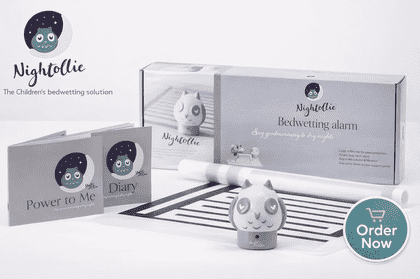
A bedwetting alarm is widely considered the most effective long-term treatment for children who regularly wet the bed.
How bedwetting alarms work
A sensor detects the first drop of moisture.
The alarm sounds or vibrates.
The child wakes and goes to the toilet.
Over time, the brain learns to wake before wetting occurs.
This conditioning method helps build a strong brain–bladder connection.
Benefits of Bedwetting Alarms
Treat the root cause, not just symptoms.
Success rates of 60–80% with consistent use.
Lower relapse rates than medication.
Drug-free and safe.
Builds independence and confidence.
Many paediatric guidelines recommend alarms as the first-line treatment for persistent bedwetting.
How Long Does It Take to Stop Bedwetting?
Progress varies from child to child, but a typical timeline looks like this:
Weeks 1–2
Child begins waking to the alarm.
Parents may need to assist.
Weeks 3–5
Fewer wet nights.
Child responds more quickly.
Weeks 6–10
Many children achieve consistent dryness.
Continue using the alarm until the child has 14 consecutive dry nights.
Bedwetting Alarm vs Medication
FeatureBedwetting AlarmMedicationTreats root causeYesNoLong-term successHighOften temporarySide effectsNonePossibleRelapse rateLowHigher
Medication may be useful for short-term situations, such as camps or sleepovers, but alarms are usually better for lasting results.
Tips for Successful Bedwetting Alarm Training
For best results:
Use the alarm every night.
Wake the child fully when it sounds.
Guide them to the toilet.
Reset the alarm and return to sleep.
Avoid:
Inconsistent use.
Stopping too early.
Punishment or criticism.
Consistency is the biggest predictor of success.
When to See a Doctor
Speak with a healthcare professional if your child:
Has pain while urinating.
Suddenly starts bedwetting after being dry.
Snores heavily or has breathing problems at night.
Has frequent daytime accidents.
These may indicate an underlying medical issue.
Common Questions About Stopping Bedwetting
Do children grow out of bedwetting naturally?
Yes. About 15% of children become dry each year without treatment.
What is the fastest way to stop bedwetting?
Bedwetting alarms are considered the most effective long-term solution.
Should parents wake their child at night?
Routine waking is usually not recommended. It doesn’t teach the child to recognise bladder signals.
Choosing the Right Solution for Your Child
The best approach depends on:
The child’s age.
Frequency of bedwetting.
Motivation level.
Sleep patterns.
For children over six who wet the bed regularly, a bedwetting alarm is often the most effective and lasting solution.
Final Thoughts
Bedwetting is a normal developmental phase, but it can still affect a child’s confidence and family routines. With the right approach, most children achieve dry nights successfully.
Simple habit changes, positive reinforcement, and consistent use of a bedwetting alarm can make a significant difference. With patience and support, dry nights are achievable for most children.